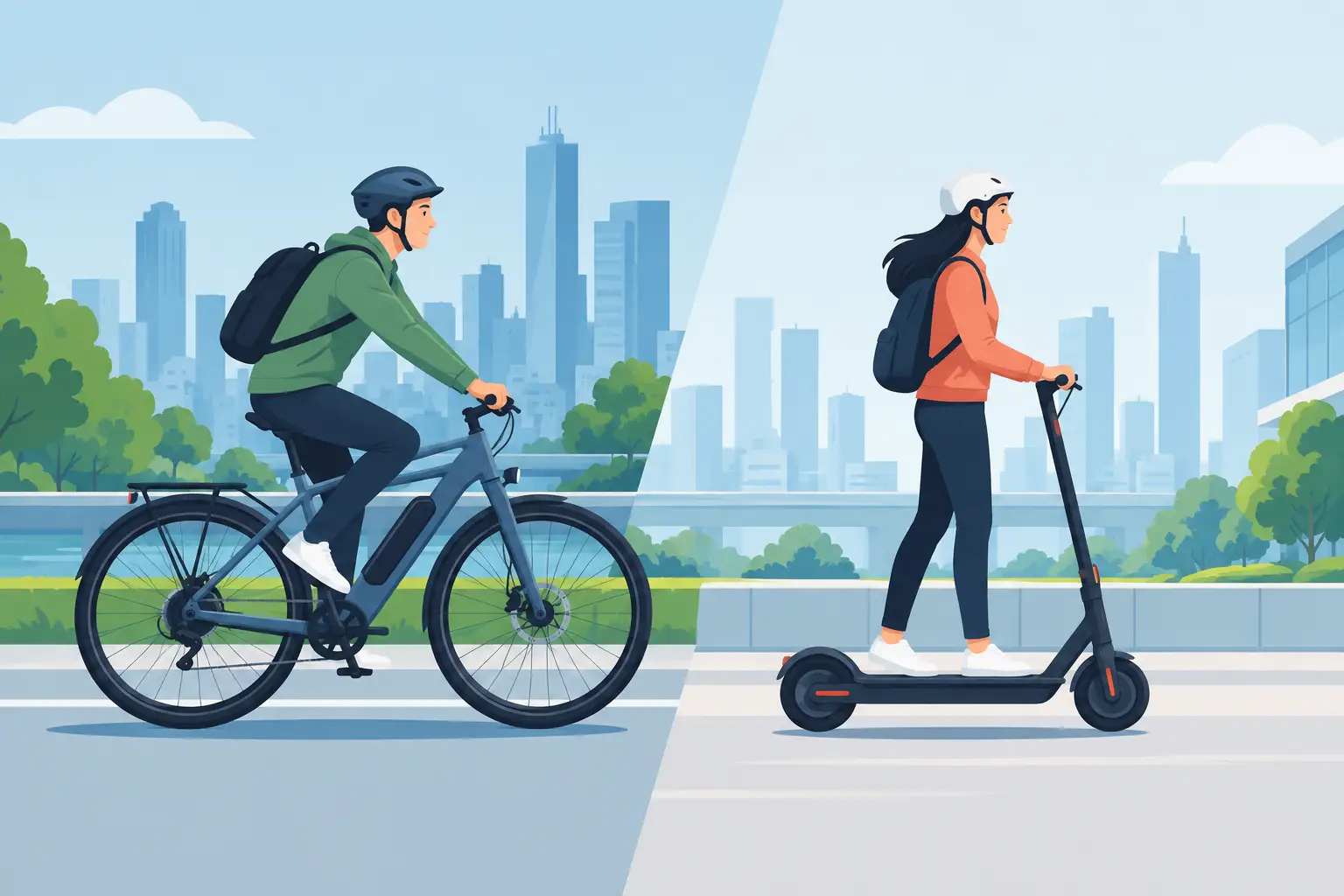
A parking garage fee, a traffic backup, and a two-mile walk from the train can make a simple workday feel expensive before lunch. That is why e-bike vs scooter commuting is less about picking the trendiest electric ride and more about choosing the machine that makes your actual route easier, faster, and worth repeating five days a week.
Both options can cut fuel costs, reduce parking headaches, and turn short urban trips into something far more enjoyable. But an e-bike and an electric scooter solve different problems. One is built around seated comfort, pedaling support, and longer practical range. The other is built around compact storage, quick hops, and a low-effort grab-and-go routine.
E-Bike vs Scooter Commuting: The Quick Answer
Choose an e-bike if your commute is longer, hillier, or physically demanding, or if you need to carry a backpack, laptop, groceries, or a change of clothes. A pedal-assist e-bike is also the stronger choice for riders who want better stability in rough pavement, more confidence around traffic, and a ride that remains usable when the battery runs low.
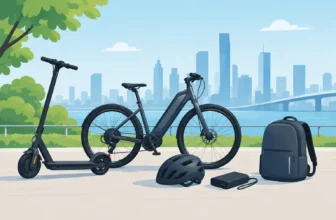
Choose an electric scooter if your route is short, mostly smooth, and includes stairs, elevators, office storage, or public transit. A folding scooter can fit under a desk or in a trunk far more easily than a bike. For a one-to-three-mile ride to the office, station, gym, or coffee shop, that convenience can be hard to beat.
The best choice is not always the one with the highest top speed or biggest advertised range. It is the one you will charge, store, lock, and ride consistently without turning your commute into another chore.
Ride Comfort Changes the Daily Decision
Comfort matters more after the first week. Many shoppers focus on motor wattage and maximum speed, then discover that cracked pavement, potholes, railroad crossings, and a laptop bag define the real riding experience.
An e-bike generally wins on comfort. Larger tires, a longer wheelbase, a seat, and handlebars with multiple hand positions make a 20- to 40-minute trip much more manageable. Step-through frames are especially practical for commuters wearing office clothes or carrying gear. If your route includes uneven streets, bridges, bike paths, or long stretches of road, the extra stability feels like a serious upgrade.
Scooters are convenient, but standing for an entire ride can become tiring. Small wheels react more sharply to broken pavement, and riders need to stay alert for road seams and wet leaves. Suspension helps, and pneumatic tires can improve ride quality, but a scooter still asks more from your knees, wrists, and balance than a seated e-bike.
That does not make scooters a bad choice. For a quick, smooth route, standing can feel simple and efficient. It just becomes less appealing when the trip grows longer or the streets get rough.
Range, Speed, and Hills
Published range numbers are useful for comparing models, but they are rarely a promise. Rider weight, hills, wind, tire pressure, temperature, riding mode, cargo, and frequent stops all affect how far a charge will go.
E-bikes often offer stronger real-world range because riders can pedal when needed. Pedal assist also spreads the work between you and the battery, which is valuable on longer routes. If you have a six-mile commute each way, steep hills, or limited access to charging at work, an e-bike gives you more backup options. You can lower the assist level on flat sections and save battery for the climb home.
Scooters are excellent for short-distance efficiency, but their smaller batteries can make range planning more important. A scooter rated for 18 or 20 miles may be plenty for a three-mile round trip, even with a safety margin. For a 10-mile round trip, however, you will want to look past the headline number and consider whether cold weather or an uphill route could leave you charging more often than expected.
Speed deserves a reality check too. Many US bike paths, local streets, campuses, and transit systems have rules that limit where and how fast electric rides can operate. A fast model is not automatically the fastest commute if you are stuck carrying it around a restricted area or avoiding routes where it is not permitted. Check local e-bike classifications and scooter rules before buying.
Portability and Storage: The Scooter Advantage
This is where scooters often pull ahead. A folding electric scooter can be carried into an apartment, stored near a desk, placed in a closet, or loaded into a car trunk with minimal planning. For commuters who combine driving, buses, or rail with a last-mile ride, that compact footprint is the main selling point.
An e-bike needs more space and more security. Unless you can bring it inside, you need a reliable place to lock it at home and at your destination. Apartment dwellers should measure elevator doors, hallway space, and storage areas before ordering. A heavy fat-tire e-bike may look like a great deal, but it is not a bargain if it is too cumbersome to carry up one flight of stairs.
On the other hand, e-bikes offer far better cargo options. A rear rack, panniers, front basket, frame bag, or cargo rack can turn a commute into an errand run. Carrying a work bag and a few groceries on a scooter is possible, but hanging heavy bags from the handlebars can affect steering and stability.
Cost Is More Than the Purchase Price
A scooter usually costs less upfront than a quality commuter e-bike. That makes it an attractive entry point for riders testing whether electric commuting fits their lifestyle. It can also be a smart second vehicle for short local errands.
Still, compare the full setup, not just the sale price. A dependable commuter setup may include a helmet, lock, lights, reflective gear, phone mount, tire pump, weather protection, and storage equipment. For an e-bike, a high-quality lock is especially worth the investment. For a scooter, a carry strap or compact storage solution may make daily use easier.
Battery replacement is another long-term consideration. Look for established brands with available replacement parts, clear battery information, and accessible service support. A limited-time discount is appealing, but a deeply discounted model with difficult-to-find tires, brake components, or chargers can become frustrating fast.
What to Buy for a Safer, Easier Commute
The right accessories protect your ride and remove small daily inconveniences. Before choosing add-ons, think about where you park, what you carry, and whether you ride after dark. These practical upgrades deliver more value than flashy extras:
- A certified helmet with a comfortable fit, because the best safety gear is the gear you will wear every ride.
- Front and rear lights, plus reflective details for early-morning or evening visibility.
- A sturdy lock for an e-bike or a compact lock for scooter stops when bringing it indoors is not an option.
- A weather-resistant phone mount and portable battery pack for navigation, messages, and emergency charging.
- A small tire pump and basic repair kit, especially for pneumatic tires that lose pressure over time.
Commuters who ride in rain should also prioritize fenders. They may not look exciting in a product listing, but they can save your pants, shoes, and work bag from road spray. For e-bikes, a rear rack and waterproof pannier often provide more everyday benefit than extra motor power.
Match the Ride to Your Route, Not the Hype
An e-bike is usually the better all-around commuter vehicle. It handles distance, cargo, hills, and inconsistent road conditions with more comfort and versatility. It is the practical pick for replacing regular car trips, especially if parking costs or traffic are draining your budget.
A scooter is the sharper choice for compact city living and short last-mile travel. It folds away, starts quickly, and makes sense when space is limited. It can also be a strong value when your route is flat and you do not need to carry much more than a backpack.
Before you shop, map your real commute at the time you will ride it. Notice hills, street quality, bike-lane gaps, train transfers, rain exposure, and secure parking options. The right electric ride is the one that fits those details well enough that leaving the car behind feels easy tomorrow morning.