A charging adapter can be a $30 convenience purchase or an expensive piece of gear that never leaves your trunk. Choosing Tesla charging adapters starts with a simple question: where do you actually charge most often? Your driveway, workplace, gym, family home, and regular road-trip routes matter far more than buying every adapter that appears in a search result.
For most Tesla owners, the smartest setup is small and purpose-built. Start with reliable home charging, add only the public-charging access you will use, and save your budget for accessories that solve a real problem. Compatibility, charging speed, safety certification, and cable handling all deserve a closer look before a limited-time deal becomes a regrettable purchase.
Start With Your Tesla Charging Situation
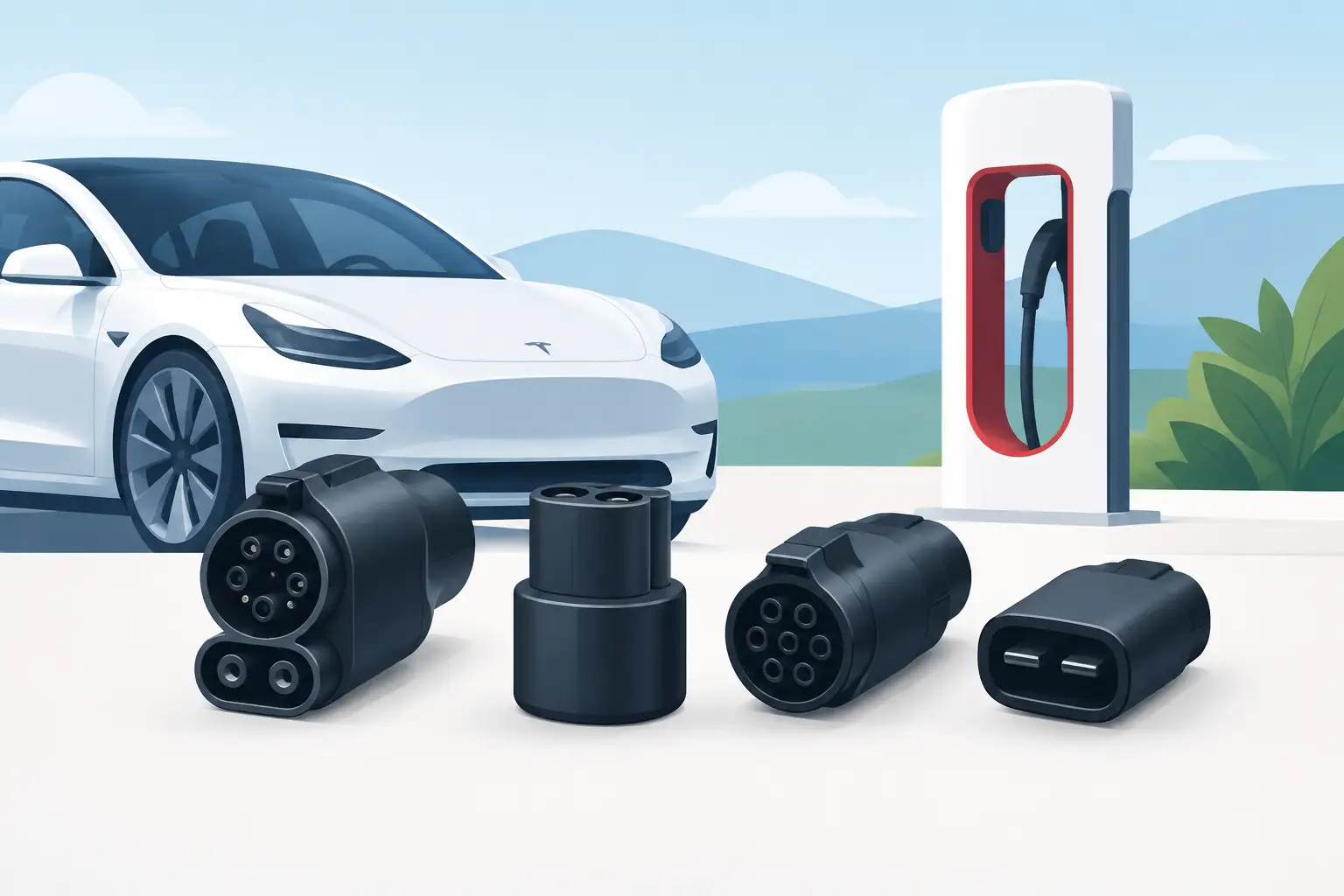
Tesla vehicles in North America use the NACS charge port. Tesla Superchargers use that same connector, so you do not need an adapter to charge your Tesla at a Tesla Supercharger. That covers a major part of the public fast-charging experience right away.
The adapter question usually appears when you want access to other equipment: a standard Level 2 charger at an apartment building, a destination charger at a hotel, a CCS fast charger on a road trip, or a specific outlet at home. These are different use cases, and one adapter does not solve them all.
Before shopping, check your Tesla model year, trim, and charging hardware. Some adapter support can depend on the vehicle’s onboard equipment or software compatibility. Also check what came with your car. Tesla deliveries and included accessories have changed over time, so do not buy a duplicate based on an old forum post or a product photo.
Choosing Tesla Charging Adapters by Connector Type
J1772 to NACS: The everyday public Level 2 choice
A J1772-to-NACS adapter lets a Tesla connect to the most common non-Tesla Level 2 public chargers in the US. You may see these at workplaces, municipal garages, hotels, shopping centers, and multifamily properties. This is the adapter many owners will use most often because it expands access to slower, convenient charging where the car is parked for a while.
It is not a DC fast-charging adapter. Level 2 charging is ideal when you have time – during work, dinner, an overnight stay, or a long appointment. If you mainly charge at home and take occasional local trips, a quality J1772 adapter may be the only extra adapter worth carrying.
Look for a secure locking fit, weather-resistant construction, and a current rating that meets or exceeds the charging equipment you expect to use. Avoid vague listings that do not clearly state the connector standard, supported amperage, and vehicle compatibility.
CCS1 to NACS: More fast-charging flexibility, with conditions
A CCS1-to-NACS adapter can give eligible Teslas access to compatible DC fast-charging stations outside Tesla’s network. This can be valuable on routes where a CCS station fills a real gap or where a charging membership makes the stop worthwhile.
The trade-off is that DC fast-charging access is more complicated than simply matching plugs. Your Tesla must support the adapter and the specific charging network must permit Tesla access. Station reliability, payment setup, cable length, and available power can vary dramatically. A 350 kW number on a charger does not mean every vehicle receives 350 kW, and charging speed naturally tapers as the battery fills.
For frequent road trippers, this adapter can be a useful backup. For a driver who relies on Tesla Superchargers and charges at home, it may be an expensive just-in-case purchase. Check your usual routes before you buy.
NEMA outlet adapters: Match the outlet, not the label
Outlet adapters are for use with a portable charging unit, often called a mobile connector. They do not turn a wall outlet into a high-speed DC charger. Their job is to let your mobile connector use a particular receptacle safely.
A standard 120V household outlet is convenient but slow. A properly installed 240V outlet can provide much more useful overnight charging, depending on the circuit, outlet type, mobile connector, and vehicle settings. Common options include 14-50 outlets, but the right choice depends on your home’s electrical setup, not on what another Tesla owner installed in a garage.
Never use a plug adapter to force a mismatch between your connector and outlet. If the outlet type, circuit capacity, or wiring condition is uncertain, have a licensed electrician inspect it. Heat at a plug, a loose receptacle, or repeated breaker trips are warning signs, not minor inconveniences.
CHAdeMO: A niche option for a shrinking need
CHAdeMO adapters still exist, but they are a specialized choice rather than a default recommendation. The network is less common than it once was, and the adapter can be costly. Unless you regularly use a known, reliable CHAdeMO location that solves a route problem, your money is usually better spent on home charging equipment or a more broadly useful adapter.
Do Not Confuse an Adapter With Charging Equipment
An adapter changes the connection between your Tesla and an available charging source. It does not increase the capacity of a weak circuit, repair an outdated outlet, or make a low-power charger fast.
Your charging speed is limited by the lowest-capacity part of the system: the electrical circuit, outlet, charging unit, adapter rating, vehicle capability, battery temperature, and sometimes the station itself. A premium-looking adapter cannot overcome those limits.
This distinction matters most at home. If you are charging nightly from a standard wall outlet and need more range by morning, adding adapters may not be the answer. A professionally installed Level 2 setup can be a better long-term upgrade, especially for households with longer commutes or more than one EV.
What to Check Before You Buy
A deal is only a deal if the adapter fits your vehicle, charging plan, and safety expectations. Use this quick buying filter before adding one to your cart:
- Confirm the source-side connector and the vehicle-side connector. Product names can be confusing, so inspect the photos and specifications.
- Verify your Tesla model, model year, and adapter eligibility, particularly for CCS fast charging.
- Check the maximum voltage and amperage rating, plus whether the product is intended for AC Level 2 or DC fast charging.
- Look for solid build quality: firm connector engagement, protective caps, weather resistance, and clear safety information.
- Read recent owner feedback for heat issues, fit problems, charging interruptions, and customer support response.
Recognizable brands and official-compatible equipment are often worth the extra cost for a component that carries significant electrical current. Ultra-cheap no-name adapters can be tempting, especially during flash sales, but inconsistent fit and poor thermal performance are not worthwhile risks.
Build a Practical Tesla Adapter Kit
Most owners do not need a large collection. A practical kit often includes the charging equipment you use at home, a J1772-to-NACS adapter for destination and workplace charging, and a clean storage case or trunk organizer to keep cables from rolling around. Add a CCS1-to-NACS adapter only if compatible non-Tesla DC fast chargers improve the routes you actually drive.
If you rent, travel often, or visit homes with different outlet types, outlet-specific adapters can make sense. Keep them labeled and store them dry. For drivers with a dedicated garage and reliable public fast-charging nearby, fewer pieces usually means faster decisions and less clutter.
Weather, cable weight, and real-world handling
Adapter specifications tell only part of the story. In winter, thick cables can be stiff. In rain, you want connector covers that are easy to manage without dropping them in a puddle. At crowded public stations, a compact adapter that locks firmly and fits easily in its case is more valuable than a bulky item with features you will never use.
Keep connector pins clean and dry, avoid pulling on the cable to remove a connector, and inspect the adapter periodically for cracks, discoloration, loose parts, or damaged seals. Stop using it if it becomes unusually hot, fits loosely, or produces repeated charging errors.
The best adapter is not the one with the longest compatibility claim. It is the one that turns the chargers you already encounter into reliable options, without adding unnecessary cost or complexity to every drive.