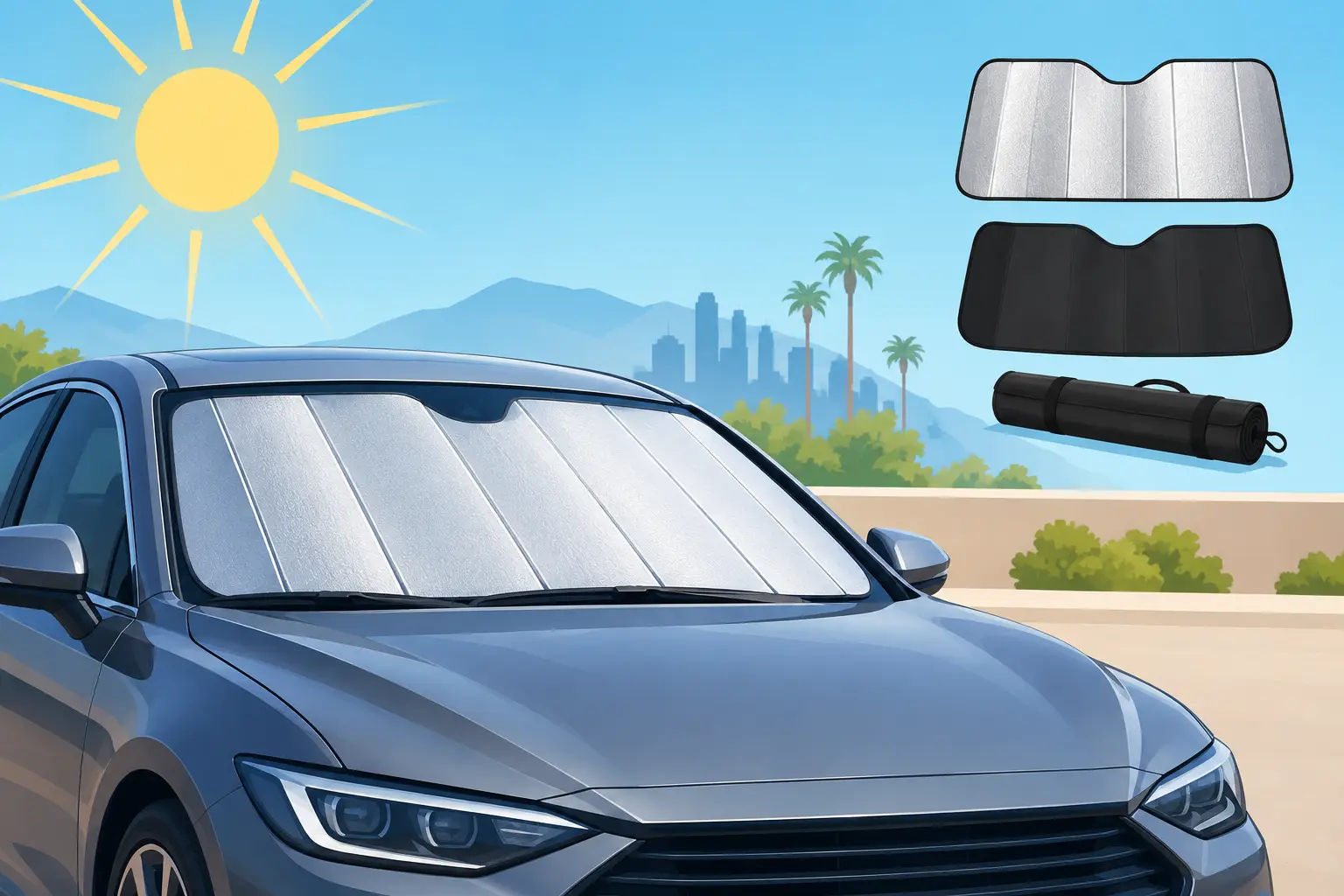
A black steering wheel that feels too hot to touch is more than a summer annoyance. Heat and UV exposure can fade dashboards, dry out trim, make leather seats miserable, and force your air conditioning to work harder the moment you get back in. The best windshield sun shades create a simple barrier between your cabin and a blazing parking lot – one of the lowest-cost upgrades you can make for daily comfort and long-term interior care.
For commuters, family SUVs, work trucks, and premium vehicles alike, the right shade is less about finding the flashiest option and more about getting a design you will actually use. Fit, folding style, material, and storage all matter. A cheap universal shade that falls down every time may cost less, but it is not a deal if it spends the summer shoved under a seat.
What Makes the Best Windshield Sun Shades Worth Buying?
A windshield shade cannot stop every bit of heat from entering a vehicle. Side glass, rear glass, roof panels, and hot interior surfaces still contribute. What it can do is block direct sunlight from hitting the dash, wheel, front seats, and center console for hours at a time. That makes the cabin feel noticeably more manageable when you open the door.
The best options also help preserve the areas owners notice most. This is especially relevant for vehicles with dark dashboards, leather upholstery, infotainment screens, wood trim, or panoramic glass. If you drive a Tesla, BMW, Mercedes-Benz, Audi, Porsche, Lexus, or Land Rover, keeping the interior looking sharp is part of protecting the ownership experience.
A good shade should cover most of the windshield, stay in place behind the visors, fold away without a fight, and survive repeated use. Those basics are more valuable than inflated heat-blocking claims on a product listing.
Choose the Right Sun Shade Style
There is no single best style for every driver. The most useful choice depends on how often you park in direct sun, how much cargo space you have, and whether a precise vehicle fit matters to you.
Accordion-fold reflective shades
Classic accordion shades are the familiar silver panels that fold flat in sections. They are affordable, widely available, and easy to understand. Many include a reflective outer surface and a foam or insulated inner layer.
This style works well for shoppers who want a budget-friendly solution for an older daily driver, a second vehicle, or a work vehicle. The drawback is fit. Universal accordion shades may leave gaps around curved windshields and mirror housings, particularly on larger SUVs and cars with steep glass. They also tend to look worn after a season or two if the edges bend or the foil layer creases.
Pop-up circular shades
Pop-up shades twist into a compact circle when stored. They are lightweight and usually easy to deploy, making them a practical option for drivers who use a shade during every workday stop.
Their biggest advantage is storage. A folded pop-up shade can slip into a door pocket, seat-back pocket, or under-seat organizer. Their weakness is the folding technique. Some drivers love the compact size; others get tired of wrestling the shade back into its storage loop. They are also frequently universal fit, so measure carefully before ordering.
Custom-fit folding shades
Custom-fit shades are designed around a specific vehicle windshield shape. They typically use thicker insulated material, reinforced edges, and a sturdier folding pattern than basic universal models. For enthusiasts and drivers who keep a vehicle for years, this is often the smart upgrade.
The close fit reduces uncovered glass, keeps the shade more stable, and gives the cabin a cleaner look when it is installed. The trade-off is price and storage size. A custom shade can be bulkier than a thin pop-up model, but the daily payoff is better coverage and less frustration. For premium interiors, that added protection can justify the extra spend.
Umbrella-style sun shades
Umbrella-style shades open from a central handle and collapse like a compact umbrella. They are quick to store and can be convenient in tight parking spaces, where opening wide doors to position a large shade is awkward.
Check the dimensions and center-handle design before buying. Some umbrella models do not sit neatly around a rearview mirror or may press against a dashboard screen or trim. They are convenient, but not automatically better than a custom folding shade for coverage.
Fit First, Then Compare Materials
Before you focus on a discount percentage, check your windshield dimensions. Measure the width across the inside of the glass at its widest point, then measure the height from the dashboard to the top edge. Compare those numbers with the listing dimensions, not just labels such as “large SUV” or “universal.”
For a vehicle-specific shade, confirm the exact model year and body style. A sedan, coupe, and SUV from the same manufacturer can have very different windshield shapes. This matters even more with vehicles that have camera housings, unusual mirror placements, or sharply raked glass.
Material affects durability and how the shade feels to use. Reflective foil-faced shades are common and economical, while multi-layer insulated designs usually offer more structure and better resistance to sagging. Fabric-backed products can look more refined and may hold up better than thin metallic film, although they are often thicker to store.
Look for reinforced seams, binding around the outer edge, and a storage strap or case. These details sound minor, but they separate a shade you can use every afternoon from one that tears at the fold lines after a few weeks in the trunk.
Features That Actually Matter in Daily Use
Not every extra feature deserves a higher price. Prioritize the parts that make daily use easier: dependable fit, a stable design, simple storage, and materials that hold their shape.
A rearview-mirror cutout can improve fit, although it is not essential if the shade is flexible enough to sit around the mirror mount. Built-in suction cups may help on some designs, but they can also fail in heat and leave marks on the glass. In many vehicles, lowering both sun visors is enough to secure the shade.
A storage pouch is useful for keeping a reflective surface from catching on cargo, especially if you carry detailing gear, gym equipment, groceries, or pet supplies. If your vehicle doubles as a family hauler or mobile office, choose a shade that packs down neatly rather than one that becomes another loose item in the cabin.
Color is mostly a personal preference for the interior-facing side. The exterior-facing reflective layer does the main work. Do not pay a premium just for a printed design unless you genuinely want the look.
Match Your Budget to How You Park
For occasional use, a basic universal reflective model can be a sensible buy. It is a practical choice for weekend errands, airport parking, or a vehicle that is usually kept in a garage. The key is to select one that is slightly larger than your windshield rather than one that leaves wide exposed edges.
For a daily commuter parked outside at work, move up to a thicker pop-up, umbrella, or better-built accordion design. You will handle it hundreds of times over the year, so convenience becomes part of the value calculation.
For a newer vehicle, a luxury model, or a classic car with an interior you want to preserve, custom-fit is usually the stronger long-term move. It costs more upfront, but it delivers the coverage, stability, and finish that make it easier to use consistently. That is where a comparison tool and current deal pricing can help separate a real value from a low-quality bargain.
A Quick Pre-Buy Check
Before adding a sun shade to your cart, confirm four things: your windshield width and height, whether the product is universal or vehicle-specific, how it folds for storage, and whether the listed material looks durable enough for daily handling. Also read recent buyer feedback for notes about mirror clearance, edge gaps, and fit on your exact vehicle type.
Avoid treating a windshield shade as a replacement for common-sense parking choices. Whenever possible, use shade, crack windows only when it is safe and appropriate, and keep heat-sensitive items out of the cabin. A windshield sun shade works best as one part of a simple hot-weather routine.
The best time to buy is before the first brutal stretch of summer turns every drive into a cooldown session. Pick the fit you will use, watch for limited-time offers, and give your dashboard, steering wheel, and front seats a break before the next long parking-lot stop.