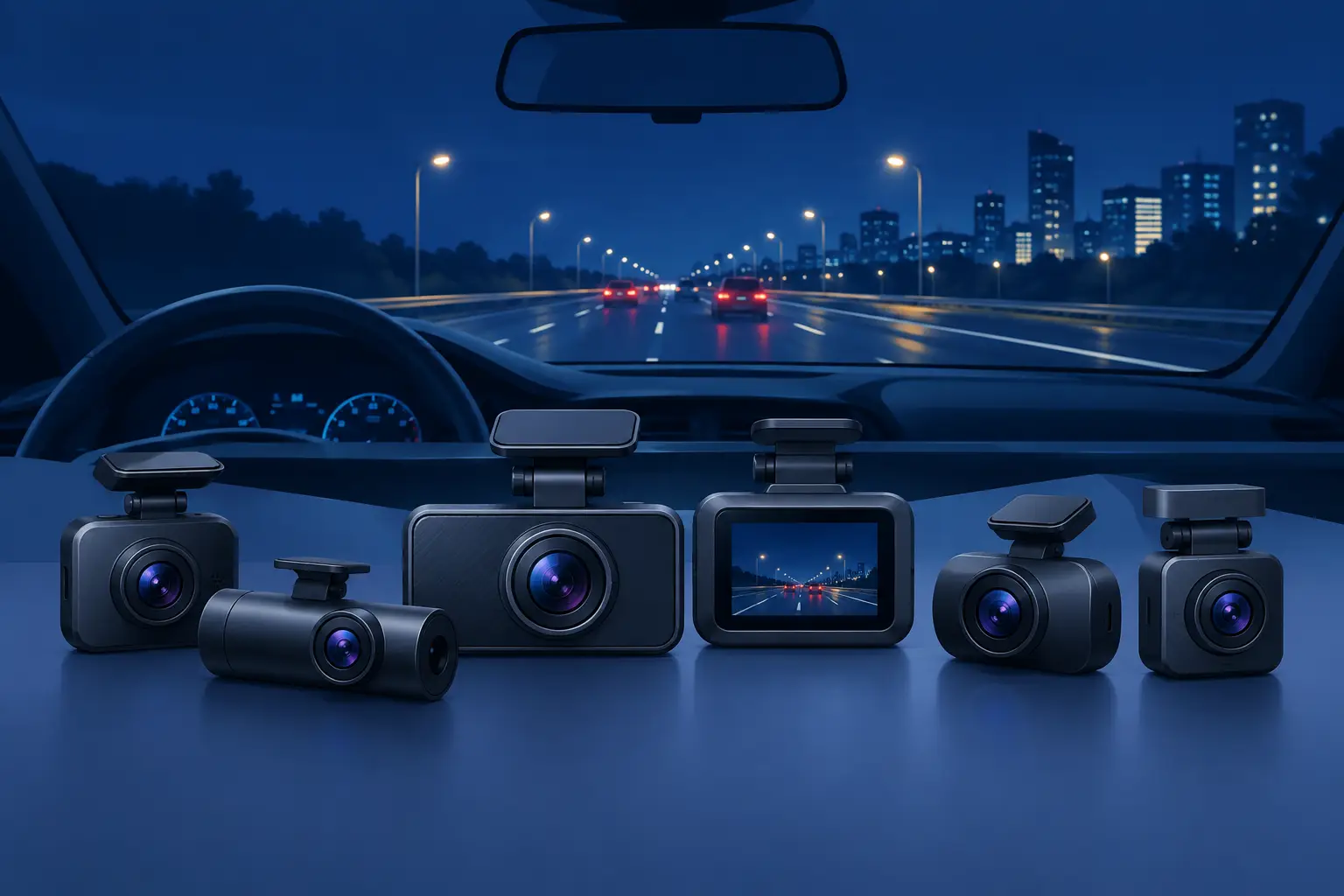
A dash cam that looks sharp at noon can turn a license plate into a glowing blur after dark. That difference matters when you are commuting home in rain, parking a BMW on the street, or taking a weekend road trip in your Tesla. The best dash cams for night driving are not simply the cameras with the biggest 4K label. They combine a strong image sensor, controlled headlight glare, dependable recording, and a setup that fits how you actually use your vehicle.
For deal-focused shoppers, the smart move is to pay for nighttime image quality before paying extra for novelty features. A camera that records usable details during a low-light incident is worth more than a long list of app features you never open.
What Makes a Dash Cam Good at Night?
Night driving is hard on every camera. Your windshield reflects cabin lights, headlights create bright hot spots, and street signs can blow out in a frame. Low-cost cameras often compensate by brightening everything, which creates grainy footage and wipes out the details you need.
Look first for a newer low-light image sensor, especially a Sony STARVIS or STARVIS 2 sensor. These sensors are widely used in better dash cams because they can collect more usable light while controlling noise. A wide aperture lens also helps, but sensor quality and image processing are usually more important than a big aperture number printed on the box.
Resolution still matters. A true 4K front camera gives you more pixels to work with when reviewing a distant vehicle or plate. But it is not an automatic win. A well-tuned 2K camera with a modern sensor can deliver clearer nighttime evidence than a bargain 4K model that uses heavy sharpening and poor exposure control.
The final piece is high dynamic range, often listed as HDR or WDR. This feature helps the camera balance a dark road with oncoming headlights, illuminated storefronts, and reflective license plates. It cannot create detail that the sensor never captured, but it can make a major difference in real-world footage.
7 Best Dash Cams for Night Driving by Buyer Type
These picks focus on proven camera lines and feature sets that make sense for US drivers. Pricing changes frequently, so compare current sale prices, included memory cards, and whether a hardwire kit is bundled before checking out.
1. VIOFO A229 Pro for premium front-and-rear coverage
The VIOFO A229 Pro is a strong fit for drivers who want excellent nighttime footage without moving into a subscription-heavy smart-camera system. Its high-resolution front camera and modern low-light sensor technology give it the image quality serious commuters and enthusiasts look for, while the rear camera adds valuable protection in traffic and parking lots.
It is especially appealing for a newer Audi, Mercedes-Benz, or Lexus where you want a discreet setup that does not clutter the cabin. The trade-off is installation. To get clean wiring and parking mode, plan on using a hardwire kit or paying for installation.
2. Vantrue N4 Pro for rideshare and cabin recording
If you regularly carry passengers, drive for rideshare, or want a record of what happens inside the vehicle, a three-channel option such as the Vantrue N4 Pro deserves attention. It records the road ahead, behind the vehicle, and in the cabin, giving you a fuller picture after an incident.
Interior cameras can be useful at night because they often use infrared lighting. That helps capture the cabin in darkness, though it will not improve footage through the windshield. This is a bigger, more visible system than a simple front camera, so it is best for drivers who genuinely need all three views.
3. Garmin Dash Cam X310 for a compact premium setup
Garmin’s higher-end dash cams are a good match for shoppers who value a compact design, polished app experience, and recognizable brand support. The Dash Cam X310 brings high-resolution recording and driver-assistance features in a small body that works well in vehicles with limited windshield space.
It is not usually the budget leader, and some buyers will get more raw camera coverage from a similarly priced VIOFO or Vantrue bundle. Still, for a clean single-camera setup in a daily driver, it is a convenient premium choice.
4. Thinkware U3000 for serious parking protection
A great night-driving camera should also protect your car after you park it. The Thinkware U3000 stands out for drivers who leave a vehicle in apartment lots, airport garages, or city streets and want advanced parking surveillance.
Thinkware’s premium systems are known for features designed to reduce unnecessary recording while watching for impacts or movement. That can be valuable for a Porsche, Land Rover, or classic car that spends time parked outside. Expect a higher total cost once you add hardwiring and a quality memory card, but this is the kind of upgrade that makes sense when parking protection is a priority.
5. Nextbase iQ for connected security features
The Nextbase iQ is aimed at shoppers who want more than recorded footage. Its connected approach can include alerts, remote access, and added security functions depending on the plan and configuration. For a tech-forward EV owner or family vehicle, that can be genuinely useful.
The catch is value. Connected cameras can cost more upfront and may involve ongoing service fees for their full feature set. If your priority is simply clear video at night, a non-connected dual-channel camera can be the better deal. Choose this one when the live-security side matters as much as the recording itself.
6. Rove R2-4K for value-focused front coverage
The Rove R2-4K is a popular entry point for drivers who want a capable front dash cam without building a full multi-camera system. It offers the higher-resolution recording many shoppers want, a screen for easy setup, and a price that can become especially attractive during limited-time offers.
It is best viewed as a value pick rather than a complete security system. Add a rear camera or step up to a dual-channel model if you frequently park in public areas or want evidence from a rear-end collision.
7. REDTIGER F7N for affordable front-and-rear recording
The REDTIGER F7N is worth considering when you want both front and rear coverage at a more accessible price. It has become a familiar choice for drivers who want a practical upgrade over a basic single-camera unit, especially when a sale puts it well below premium two-channel systems.
You give up some of the fine nighttime tuning, build refinement, and parking-mode sophistication found on higher-priced models. For everyday driving, though, it can offer solid coverage for the money. It is a sensible choice for a first dash cam, a teen driver’s car, or a second household vehicle.
Features That Are Worth Paying For
When comparing dash cam listings, prioritize the hardware and features that affect evidence quality and long-term reliability:
- A modern low-light sensor and HDR or WDR recording for clearer footage around headlights and streetlights.
- Front and rear cameras if you drive in dense traffic, park in public, or want a more complete incident record.
- Buffered parking mode, which saves footage from the seconds before an impact instead of starting only after it happens.
- A hardwire kit with low-voltage protection, so parking mode does not drain the vehicle battery too far.
- GPS that can be switched off, giving you the choice to record route and speed data without permanently sharing it.
- A high-endurance microSD card from a known brand, because standard cards can fail under constant heat and rewrite cycles.
Do not overpay for a huge display if you plan to use the app, and do not assume voice control improves video quality. Those extras are convenient, but they should come after sensor quality, channel coverage, and reliable storage.
Installation Can Make or Break Night Footage
Even the best camera can underperform if it is mounted poorly. Place the front camera high on the windshield, close to the rearview mirror, where it has an unobstructed view without blocking your sightline. Keep the lens area of the windshield clean inside and out. A greasy interior film can scatter headlights and make nighttime footage look hazy.
Aim the camera so it records enough road while keeping the horizon near the middle of the frame. If too much dark dashboard fills the image, the camera may overexpose the scene ahead. If it points too high, you lose valuable near-road detail.
For hardwired systems, use an installation kit made for your vehicle or have a professional handle it. Modern vehicles can have sensitive electronics, airbags behind trim panels, and advanced driver-assistance sensors near the windshield. Saving a few dollars is not worth pinching a wire or interfering with factory equipment.
The Best Value Depends on Where You Drive
A suburban commuter who mostly drives under streetlights may be happy with an affordable front-and-rear camera. A late-shift nurse driving rural roads needs stronger low-light performance. A luxury-car owner who parks downtown may get more value from premium parking surveillance than from 4K resolution alone.
Before you shop, decide whether your biggest risk happens while driving, while parked, or inside the cabin. Then watch for current bundle pricing that includes the rear camera, hardwire kit, or high-endurance card. The right dash cam is the one that records the details you need when the road is dark and the unexpected happens fast.