
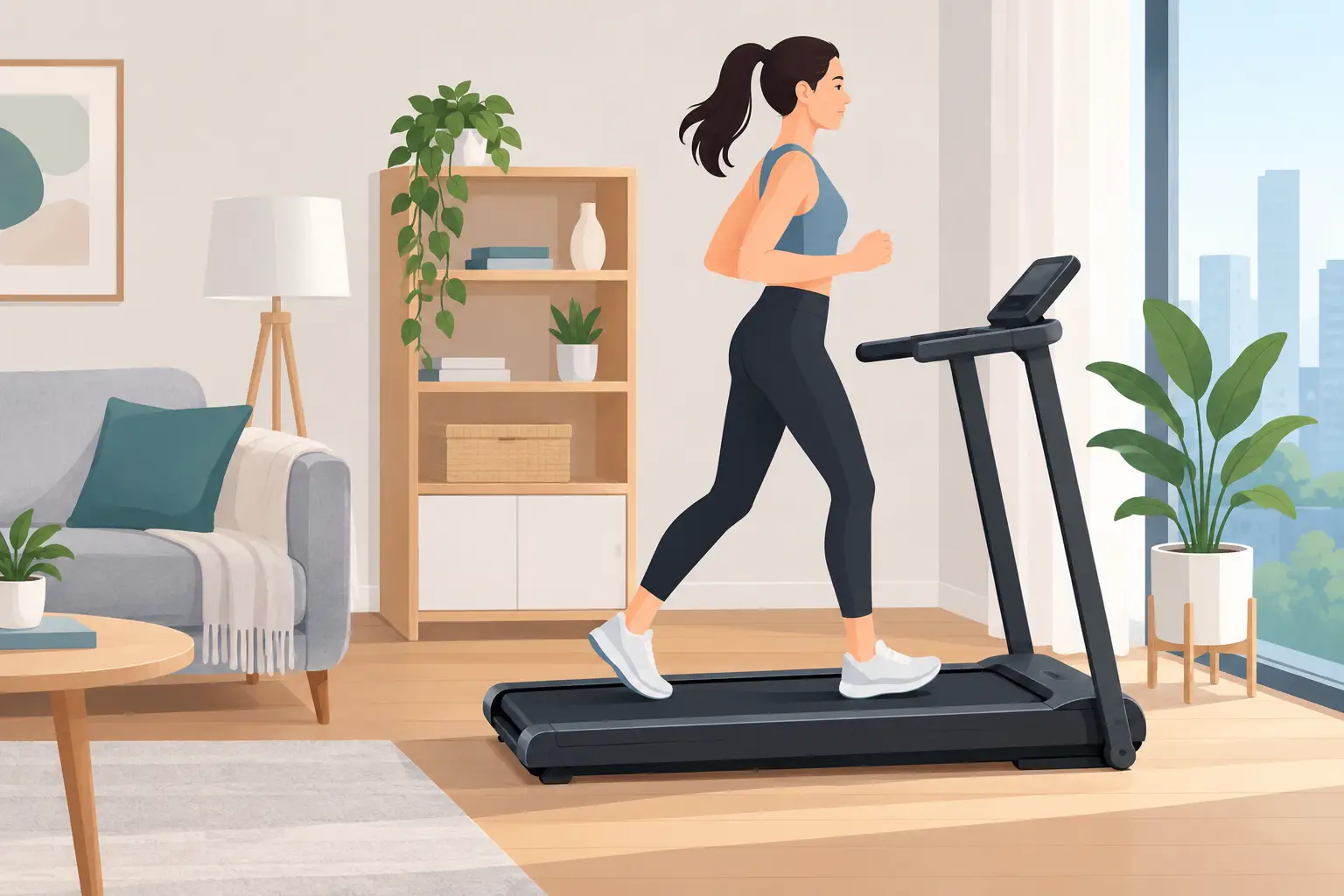
A home treadmill for small spaces should make your workout easier, not turn your apartment, spare bedroom, or garage corner into an obstacle course. The best choice is not automatically the smallest machine or the lowest-price deal. It is the treadmill that fits your floor plan, your stride, your noise limits, and the way you will realistically use it three months from now.
For many home fitness shoppers, a compact treadmill is a practical upgrade: no commute, no weather excuse, and no waiting for equipment. But dimensions, deck design, storage method, and motor capability matter more in a tight space than flashy screens or oversized cup holders. Shop the specs first, then compare current prices and discounts.
Measure Before You Shop
Start with the area where the treadmill will actually live. Measure the usable floor space, not the room itself. A guest room may sound large enough until you account for a bed, door swing, closet access, and the clearance needed to get on and off the belt safely.
Look at three measurements on every product listing: assembled dimensions, folded dimensions, and running deck dimensions. A folding treadmill can save space after a workout, but it still needs room while open. Check ceiling height, too. Your standing height plus the treadmill deck height should leave comfortable clearance overhead, especially if you plan to run rather than walk.
A practical rule is to leave open space behind the treadmill and avoid placing it directly against a wall. If you lose your footing, that buffer matters. Also consider how you will move the unit into your home. A treadmill that fits in a bedroom is not useful if its boxed dimensions cannot clear a narrow stairwell, elevator, or apartment doorway.
The deck size trade-off
Walking-focused models often use shorter, narrower decks and can be an excellent match for compact rooms. They are usually easier to store, lighter to reposition, and more affordable. The compromise is comfort at higher speeds.
If you are tall, have a longer stride, or expect to jog regularly, prioritize deck length over a few inches of saved floor space. A deck around 50 inches may be fine for walking and light jogging for many users, while runners generally benefit from more room. Check the listed weight capacity as well. It is a useful indicator of whether the frame and motor are designed for your intended use, though it should never replace proper setup and safe operation.
Choose the Right Type of Home Treadmill for Small Spaces
There are three common compact treadmill styles, and each suits a different routine.
Under-desk walking pads
Walking pads are low-profile units designed primarily for walking. Many slide under a sofa, bed, or desk when not in use, making them a strong option for apartments, remote-work setups, and multipurpose rooms. They usually have a smaller footprint than traditional treadmills and may use a remote control or simple display instead of a large console.
The trade-off is clear: most are not built for hard running sessions, steep inclines, or long, high-speed training. If your fitness goal is accumulating daily steps while answering emails or watching a show, that is not a drawback. It is the right tool for the job.
Fold-flat treadmills
A fold-flat model combines a running belt with a hinged handrail or console that folds down. This gives you more stability than a basic walking pad while making vertical or under-furniture storage possible. Some designs can be stored upright against a wall, but confirm whether the manufacturer specifically supports vertical storage before relying on that feature.
These are a smart middle ground for shoppers who want to walk most days and jog occasionally. Pay attention to the handrail height, speed range, and whether the display remains usable when the unit is in its lower-profile mode.
Traditional folding treadmills
A conventional folding treadmill has a full upright console and a deck that lifts toward it. It takes up more room when open, but it often delivers a longer deck, more substantial cushioning, higher speed capability, and a better experience for regular runners.
This is usually the better buy if your small space is a dedicated home gym corner, garage, or basement area rather than a studio apartment. The folded footprint may still be manageable, especially when transport wheels make it easy to roll aside after use.
Look Beyond the Fold Feature
“Folding” can sound like a complete space-saving solution, but the details determine whether it works day to day. A heavy deck that is awkward to lift will stay open. A compact model with a simple assisted-fold system is more likely to be stored consistently.
Check whether the treadmill has transport wheels and where those wheels sit when folded. Consider its product weight, too. A 50-pound walking pad can be manageable for one person to slide into storage. A much heavier treadmill may require a dedicated location, even if its deck folds.
Noise is another small-space issue that deserves attention. Motor noise, belt impact, and floor vibration are different problems. A quieter motor helps, but a dense treadmill mat can make a much bigger difference for downstairs neighbors or family members in the next room. A mat also protects carpet, hardwood, laminate, and garage flooring from scuffs and sweat.
If you share walls, avoid assuming that a compact treadmill will automatically be quiet. Fast running creates impact. Walking at moderate speed on a cushioned deck is generally easier to manage in an apartment than sprint intervals before sunrise.
Specs That Actually Affect Your Workout
A screen with scenic routes can be fun, but core performance specs should lead the purchase decision. Look for a speed range that matches your current activity and leaves room for progress. A walker may be perfectly served by a lower maximum speed, while a runner should verify that the machine can handle planned training pace.
Motor information can be confusing because listings may highlight peak horsepower instead of continuous-duty output. Rather than shopping by one motor number alone, read the intended-use guidance, weight capacity, customer feedback on consistency, and warranty details. For frequent running, a sturdier frame and dependable motor are worth paying for. For daily walking, you may get better value by skipping premium running features you will never use.
Incline is valuable but not mandatory. It raises workout intensity without requiring more speed, which is useful for walkers and people working with limited training time. Still, incline mechanisms add cost, weight, and moving parts. A flat walking pad paired with consistent use can be a better fit than a bulky incline treadmill that crowds your living area.
Do not overlook controls. In a small room, you want fast start and stop access, a clear speed display, and stable handrails if balance is a concern. App connectivity, Bluetooth speakers, and tablet shelves are nice extras, but they should not come at the expense of a secure deck or convenient storage.
Set Up a Compact Fitness Zone That Gets Used
The strongest home setup is usually simple. Place the treadmill where it is easy to access, keep a mat beneath it, and store a towel, water bottle, and walking shoes nearby. If you need to unpack equipment, move furniture, and search for chargers before every session, the treadmill becomes a storage project instead of a fitness habit.
For a desk setup, make sure your desk is stable and tall enough for safe walking posture. Do not lean on a desk for balance or use a walking pad at a speed that makes typing and footing feel rushed. Short, repeatable walks are more valuable than an elaborate setup you avoid.
A compact treadmill also pairs well with a minimal recovery station: a foam roller, resistance bands, or stretching mat can fit in a basket beside the machine. That keeps the room flexible without filling it with oversized gym equipment.
Get the Best Value From Today’s Deals
Deal pricing is useful, but only when you compare like for like. A lower-priced treadmill may be the smarter purchase if it matches your walking goals, fits under your bed, and includes the basics you need. A larger discount on a heavy runner’s treadmill is not a bargain if it will block your hallway or go unused.
Before you buy, compare the current price against the original price, but also look at shipping weight, warranty coverage, replacement-part availability, and return conditions. Include the likely cost of a treadmill mat and any assembly help if needed. These small details can change the real value of a limited-time offer.
GodrakeShop-style deal browsing is especially useful when you can filter your options around a real use case: under-desk walking, foldable apartment cardio, or a compact running machine for a garage gym. Keep your shortlist focused on models that meet your measured space and workout needs, then choose the best available value.
The right treadmill does not need to dominate the room to support serious progress. Pick the one you can unfold, step onto, and use without negotiation – then let consistent miles do the work.