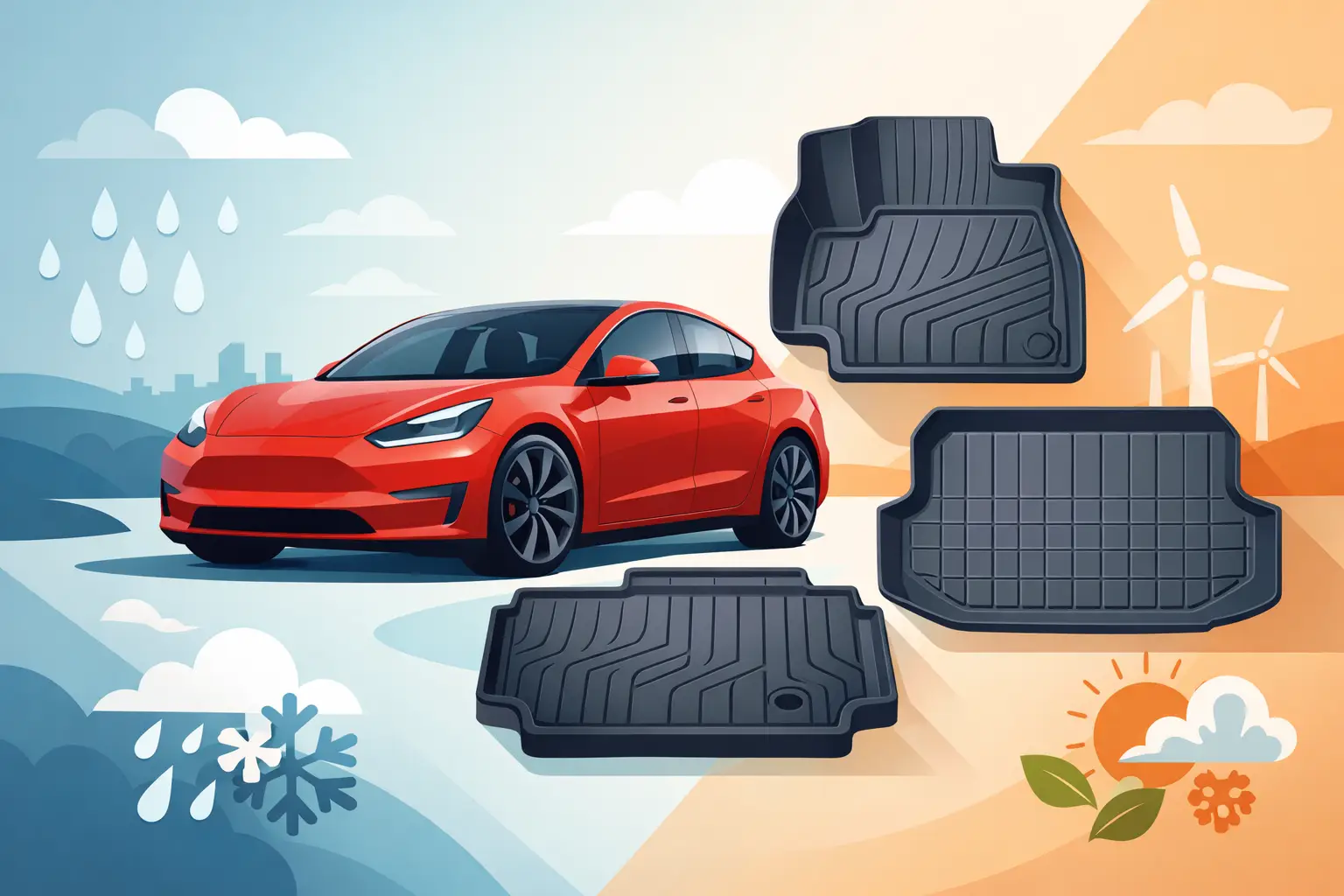
A clean Tesla interior can look premium for years, but one rainy commute or a ski-weekend parking lot can change that fast. Tesla floor mats all weather are one of the most practical upgrades for drivers who want to protect factory carpet from water, road salt, sand, coffee spills, pet hair, and everyday mess without babying the cabin.
For most owners, the right choice is not simply the most expensive mat. It is the set that matches your exact Tesla model, covers the areas your passengers actually use, stays planted underfoot, and makes cleanup quick. Whether you drive a Model 3 through city traffic, carry kids in a Model Y, or want to keep a Model S or Model X cabin looking sharp, fit and coverage are where the value lives.
Why Tesla Floor Mats All Weather Make Sense
Tesla factory carpeting is stylish and comfortable, but it is not built to shrug off slush, wet boots, gravel, or a tipped water bottle. Moisture can soak through thinner mats, settle into carpet fibers, and leave odors or stains behind. In regions with snow and salted roads, that mess can become a repeated winter problem.
All-weather mats create a contained surface between the mess and the vehicle floor. Good sets use raised outer edges, often called lips or walls, to hold melting snow and spilled liquids. Instead of scrubbing carpet, you can pull the mat out, rinse it, dry it, and reinstall it.
They also make sense for resale-minded owners. Teslas hold their appeal best when the interior feels cared for. Protecting high-contact areas such as the driver footwell, rear passenger floor, cargo space, and front trunk helps limit the cosmetic wear that shoppers notice immediately during a private sale or trade-in inspection.
Start With Exact Tesla Compatibility
The biggest buying mistake is assuming all Tesla mats are interchangeable. They are not. Model 3 and Model Y floors have different shapes, while Model S and Model X have their own cabin layouts. Even within one model line, a refresh can change console shape, rear floor contours, seat-rail placement, or cargo-area dimensions.
Check the listing for your exact model, model year, and seating configuration before comparing price. A mat described as compatible with a 2024-2025 Model 3 may not fit an earlier Model 3 correctly, and a five-seat Model Y cargo mat may differ from one designed around a seven-seat setup.
A truly vehicle-specific mat should follow the contours of the footwell instead of leaving open gaps along the door sill, pedals, center console, or rear seat edge. That close fit matters more than it sounds. A generic mat can slide, curl at the edges, collect dirt underneath, and look out of place in a minimalist Tesla cabin.
For the driver area, confirm that the mat clears the accelerator and brake pedals completely. It should sit flat and secure, with no raised edge that could interfere with pedal movement. This is a safety check, not just a style preference.
Choose Material for Your Climate and Routine
Most all-weather Tesla mats use thermoplastic elastomer, commonly listed as TPE. It is a popular option because it is waterproof, flexible, easy to rinse, and usually low-odor. Quality TPE stays pliable in colder weather, which is helpful if you live where winter mornings are well below freezing.
Rubber mats can also provide excellent grip and durability, especially in workhorse daily drivers. Their downside is that some have a stronger initial smell, can feel heavier, and may not match every Tesla interior as cleanly as a molded TPE set.
Carpet-topped mats with waterproof backing occupy a middle ground. They can look more upscale and reduce visible dust, but they are less convenient after a muddy hike or a snowy commute. For dry climates and careful owners, they may be enough. For families, dog owners, rideshare drivers, or anyone dealing with rain and snow, a molded all-weather design is usually the smarter buy.
Texture matters, too. Deep channels help direct water and debris away from shoes, while a lightly textured surface is easier to wipe down. Very aggressive grooves can trap pebbles and crumbs, so think about the mess you see most often. Beach sand, trail dirt, wet grass, and road slush do not behave the same way.
Coverage Matters Beyond the Front Seats
A front-row set is better than nothing, but it is not always the best deal. Full interior kits generally include front mats and a one-piece or split rear mat. For Model Y, Model S, and Model X owners who regularly haul gear, adding cargo protection is often worth it from day one.
Cargo mats protect against grocery leaks, folded strollers, gym equipment, muddy shoes, and loose charging accessories. If your Tesla has a front trunk, a frunk liner can be useful for wet umbrellas, roadside supplies, cleaning products, and small items that tend to roll around. It also helps keep the storage area easy to wipe clean.
Look closely at the cargo configuration. Some mats are designed to maintain access to underfloor storage, while others must be lifted out to reach it. Neither is automatically better. If you use the lower cargo compartment often for charging gear or emergency equipment, easy access is worth prioritizing. If you rarely open it, a thicker one-piece liner may offer a simpler, more contained surface.
OEM or Aftermarket: Which Offers Better Value?
Tesla-branded mats generally offer dependable fit, clean styling, and the confidence of buying for a specific vehicle. They can be a good choice for owners who want a simple, no-guesswork upgrade and prefer the factory look.
Aftermarket sets are where deal-savvy shoppers often find more choices. Many are laser-measured for specific Tesla interiors and may include extras such as a trunk mat, frunk liner, seatback protection, or higher side walls at a lower bundled price. The trade-off is variation in quality. Product photos can make every set look precise, so read compatibility details, material descriptions, and customer feedback for reports on flatness, odor, edge fit, and pedal clearance.
The lowest-priced set is not always the value pick. Thin plastic can warp in heat, become stiff in cold weather, or slide around after a few months. Spending a little more on thicker TPE, reinforced retention points, and model-specific molding can prevent a frustrating replacement later.
When comparing current deals, focus on what is actually included. A discounted front-and-rear kit may still cost more than a full-cabin bundle once you add cargo and frunk pieces separately. Compare the original price, current price, included sections, and compatibility details before calling any offer a real savings win.
Features Worth Paying Attention To
A well-designed set should have raised edges that are tall enough to contain everyday spills without becoming awkward to step over. The mats should also have a non-slip backing or factory retention compatibility that keeps them stable through repeated entry and exit.
For drivers in snowy states, taller side walls and deeper channels deserve extra weight in the decision. For warm, dry areas, a lower-profile mat may look cleaner and be easier to shake out. If pets ride in the back, consider a rear mat with a broad center section rather than separate small pieces that leave exposed carpet between them.
Color is usually straightforward. Black hides grime and suits nearly every Tesla interior, while gray or tan options can complement lighter cabins but show dirt sooner. A matte finish generally looks more factory-like than shiny molded plastic, which can reflect light and reveal scuffs.
Do not overlook odor claims. New all-weather mats may have a mild packaging smell at first, especially in a closed vehicle. Low-odor TPE options are generally the safer bet. Letting a new set air out before installation can make the first week more pleasant.
Installing and Cleaning Your Mats
Installation should take minutes. Remove the old mats, vacuum loose dirt from the carpet, line up the new mats with the footwell contours, and press them into place. Before driving, check the driver mat once more to ensure it lies flat and clears every pedal.
Routine cleaning is equally simple. Shake out dry debris weekly if needed, then rinse with water when the channels collect mud or salt. Use mild soap for stubborn grime and avoid harsh solvents that can dull the surface. Let the mats dry completely before reinstalling them, particularly in humid weather.
For the best results, do not wait until the channels overflow. A quick rinse after a winter storm or beach trip takes far less effort than cleaning dried road salt from every groove. Keep a microfiber towel or small interior brush nearby for fast touch-ups between deeper cleans.
The best floor mat upgrade is the one you stop thinking about because it quietly handles the messy parts of daily driving. Choose the exact fit, buy the coverage your routine demands, and let your Tesla stay ready for the next commute, road trip, gym run, or weekend escape.
A clean Tesla interior can look premium for years, but one rainy commute or a ski-weekend parking lot can change that fast. Tesla floor mats all weather are one of the most practical upgrades for drivers who want to protect factory carpet from water, road salt, sand, coffee spills, pet hair, and everyday mess without babying the cabin.
For most owners, the right choice is not simply the most expensive mat. It is the set that matches your exact Tesla model, covers the areas your passengers actually use, stays planted underfoot, and makes cleanup quick. Whether you drive a Model 3 through city traffic, carry kids in a Model Y, or want to keep a Model S or Model X cabin looking sharp, fit and coverage are where the value lives.
Why Tesla Floor Mats All Weather Make Sense
Tesla factory carpeting is stylish and comfortable, but it is not built to shrug off slush, wet boots, gravel, or a tipped water bottle. Moisture can soak through thinner mats, settle into carpet fibers, and leave odors or stains behind. In regions with snow and salted roads, that mess can become a repeated winter problem.
All-weather mats create a contained surface between the mess and the vehicle floor. Good sets use raised outer edges, often called lips or walls, to hold melting snow and spilled liquids. Instead of scrubbing carpet, you can pull the mat out, rinse it, dry it, and reinstall it.
They also make sense for resale-minded owners. Teslas hold their appeal best when the interior feels cared for. Protecting high-contact areas such as the driver footwell, rear passenger floor, cargo space, and front trunk helps limit the cosmetic wear that shoppers notice immediately during a private sale or trade-in inspection.
Start With Exact Tesla Compatibility
The biggest buying mistake is assuming all Tesla mats are interchangeable. They are not. Model 3 and Model Y floors have different shapes, while Model S and Model X have their own cabin layouts. Even within one model line, a refresh can change console shape, rear floor contours, seat-rail placement, or cargo-area dimensions.
Check the listing for your exact model, model year, and seating configuration before comparing price. A mat described as compatible with a 2024-2025 Model 3 may not fit an earlier Model 3 correctly, and a five-seat Model Y cargo mat may differ from one designed around a seven-seat setup.
A truly vehicle-specific mat should follow the contours of the footwell instead of leaving open gaps along the door sill, pedals, center console, or rear seat edge. That close fit matters more than it sounds. A generic mat can slide, curl at the edges, collect dirt underneath, and look out of place in a minimalist Tesla cabin.
For the driver area, confirm that the mat clears the accelerator and brake pedals completely. It should sit flat and secure, with no raised edge that could interfere with pedal movement. This is a safety check, not just a style preference.
Choose Material for Your Climate and Routine
Most all-weather Tesla mats use thermoplastic elastomer, commonly listed as TPE. It is a popular option because it is waterproof, flexible, easy to rinse, and usually low-odor. Quality TPE stays pliable in colder weather, which is helpful if you live where winter mornings are well below freezing.
Rubber mats can also provide excellent grip and durability, especially in workhorse daily drivers. Their downside is that some have a stronger initial smell, can feel heavier, and may not match every Tesla interior as cleanly as a molded TPE set.
Carpet-topped mats with waterproof backing occupy a middle ground. They can look more upscale and reduce visible dust, but they are less convenient after a muddy hike or a snowy commute. For dry climates and careful owners, they may be enough. For families, dog owners, rideshare drivers, or anyone dealing with rain and snow, a molded all-weather design is usually the smarter buy.
Texture matters, too. Deep channels help direct water and debris away from shoes, while a lightly textured surface is easier to wipe down. Very aggressive grooves can trap pebbles and crumbs, so think about the mess you see most often. Beach sand, trail dirt, wet grass, and road slush do not behave the same way.
Coverage Matters Beyond the Front Seats
A front-row set is better than nothing, but it is not always the best deal. Full interior kits generally include front mats and a one-piece or split rear mat. For Model Y, Model S, and Model X owners who regularly haul gear, adding cargo protection is often worth it from day one.
Cargo mats protect against grocery leaks, folded strollers, gym equipment, muddy shoes, and loose charging accessories. If your Tesla has a front trunk, a frunk liner can be useful for wet umbrellas, roadside supplies, cleaning products, and small items that tend to roll around. It also helps keep the storage area easy to wipe clean.
Look closely at the cargo configuration. Some mats are designed to maintain access to underfloor storage, while others must be lifted out to reach it. Neither is automatically better. If you use the lower cargo compartment often for charging gear or emergency equipment, easy access is worth prioritizing. If you rarely open it, a thicker one-piece liner may offer a simpler, more contained surface.
OEM or Aftermarket: Which Offers Better Value?
Tesla-branded mats generally offer dependable fit, clean styling, and the confidence of buying for a specific vehicle. They can be a good choice for owners who want a simple, no-guesswork upgrade and prefer the factory look.
Aftermarket sets are where deal-savvy shoppers often find more choices. Many are laser-measured for specific Tesla interiors and may include extras such as a trunk mat, frunk liner, seatback protection, or higher side walls at a lower bundled price. The trade-off is variation in quality. Product photos can make every set look precise, so read compatibility details, material descriptions, and customer feedback for reports on flatness, odor, edge fit, and pedal clearance.
The lowest-priced set is not always the value pick. Thin plastic can warp in heat, become stiff in cold weather, or slide around after a few months. Spending a little more on thicker TPE, reinforced retention points, and model-specific molding can prevent a frustrating replacement later.
When comparing current deals, focus on what is actually included. A discounted front-and-rear kit may still cost more than a full-cabin bundle once you add cargo and frunk pieces separately. Compare the original price, current price, included sections, and compatibility details before calling any offer a real savings win.
Features Worth Paying Attention To
A well-designed set should have raised edges that are tall enough to contain everyday spills without becoming awkward to step over. The mats should also have a non-slip backing or factory retention compatibility that keeps them stable through repeated entry and exit.
For drivers in snowy states, taller side walls and deeper channels deserve extra weight in the decision. For warm, dry areas, a lower-profile mat may look cleaner and be easier to shake out. If pets ride in the back, consider a rear mat with a broad center section rather than separate small pieces that leave exposed carpet between them.
Color is usually straightforward. Black hides grime and suits nearly every Tesla interior, while gray or tan options can complement lighter cabins but show dirt sooner. A matte finish generally looks more factory-like than shiny molded plastic, which can reflect light and reveal scuffs.
Do not overlook odor claims. New all-weather mats may have a mild packaging smell at first, especially in a closed vehicle. Low-odor TPE options are generally the safer bet. Letting a new set air out before installation can make the first week more pleasant.
Installing and Cleaning Your Mats
Installation should take minutes. Remove the old mats, vacuum loose dirt from the carpet, line up the new mats with the footwell contours, and press them into place. Before driving, check the driver mat once more to ensure it lies flat and clears every pedal.
Routine cleaning is equally simple. Shake out dry debris weekly if needed, then rinse with water when the channels collect mud or salt. Use mild soap for stubborn grime and avoid harsh solvents that can dull the surface. Let the mats dry completely before reinstalling them, particularly in humid weather.
For the best results, do not wait until the channels overflow. A quick rinse after a winter storm or beach trip takes far less effort than cleaning dried road salt from every groove. Keep a microfiber towel or small interior brush nearby for fast touch-ups between deeper cleans.
The best floor mat upgrade is the one you stop thinking about because it quietly handles the messy parts of daily driving. Choose the exact fit, buy the coverage your routine demands, and let your Tesla stay ready for the next commute, road trip, gym run, or weekend escape.